Artificial Intelligence — The Next Big Revolution in Computing
Artificial Intelligence — The Next Big Revolution in Computing
Artificial intelligence is a branch of computer science that aims to create intelligent machines. It has become an essential part of the technology industry. It emphasizes the creation of intelligent machines that work and react like humans. Some of the activities computers with artificial intelligence are designed for include:
- Speech recognition
- Learning
- Planning
- Problem solving

Research associated with artificial intelligence is highly technical and specialized. The core problems of artificial intelligence include programming computers for certain traits such as:
- Knowledge
- Reasoning
- Problem solving
- Perception
- Learning
- Planning
- Ability to manipulate and move objects
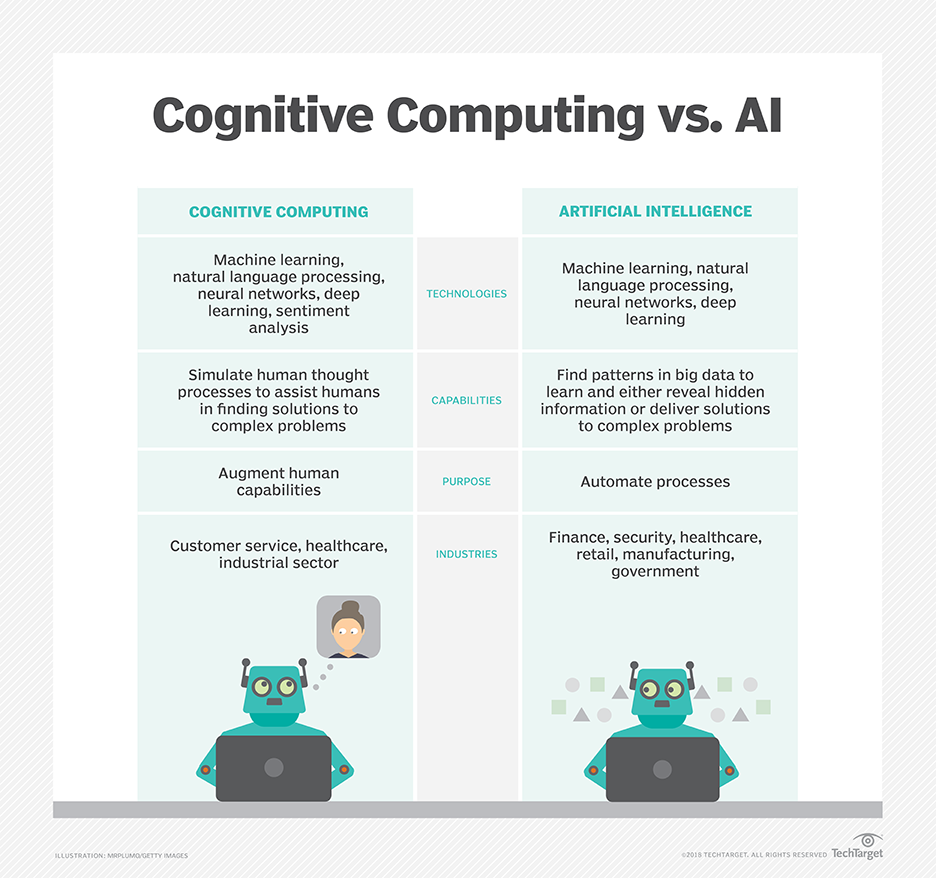
There are four types of artificial intelligence: reactive machines, limited memory, theory of mind and self-awareness.
· Reactive Machines
Reactive machines are basic in that they do not store ‘memories’ or use past experiences to determine future actions. They simply perceive the world and react to it. IBM’s Deep Blue, which defeated chess grandmaster Kasporov, is a reactive machine that sees the pieces on a chess board and reacts to them. It cannot refer to any of its prior experiences and cannot improve with practice. It analyzes possible moves — its own and its opponent — and chooses the most strategic move. Deep Blue and Google’s AlphaGO were designed for narrow purposes and cannot easily be applied to another situation.
· Limited Memory
Limited Memory machines can retain data for a short period of time. While they can use this data for a specific period of time, they cannot add it to a library of their experiences. Observations inform actions happening in the not-so-distant future Many self-driving cars use Limited Memory technology: they store data such as the recent speed of nearby cars, the distance of such cars, the speed limit, and other information that can help them navigate roads.
· Theory of Mind
Psychology tells us that people have thoughts, emotions, memories, and mental models that drive their behavior. Theory of Mind researchers hope to build computers that imitate our mental models, by forming representations about the world, and about other agents and entities in it. One goal of these researchers is to build computers that relate to humans and perceive human intelligence and how people’s emotions are impacted by events and the environment. While plenty of computers use models, a computer with a ‘mind’ does not yet exist.
· Self-Aware
Self-aware machines are the stuff of science fiction, though many AI enthusiasts believe them to be the ultimate goal of AI development. Even if a machine can operate as a person does, for example by preserving itself, predicting its own needs and demands, and relating to others as an equal, the question of whether a machine can become truly self-aware, or ‘conscious’, is best left for philosophers.
Where is Artificial intelligence used?
· Natural Language Generation:
it’s a tool that produces text from the computer data. Currently used in customer service, report generation, and summarizing business intelligence insights.
· Speech Recognition:
Transcribes and transforms human speech into a format useful for computer applications. Presently used in interactive voice response systems and mobile applications.
- Virtual Agent:
A Virtual Agentis a computer generated, animated, artificial intelligence virtual character (usually with anthropomorphic appearance) that serves as an online customer service representative. It leads an intelligent conversation with users, responds to their questions and performs adequate non-verbal behavior. - Machine Learning:
Provides algorithms, APIs (Application Program interface) development and training toolkits, data, as well as computing power to design, train, and deploy models into applications, processes, and other machines. Currently used in a wide range of enterprise applications, mostly `involving prediction or classification. - Deep Learning Platforms:
A special type of machine learning consisting of artificial neural networks with multiple abstraction layers. Currently used in pattern recognition and classification applications supported by very large data sets. - Robotic Process Automation:
using scripts and other methods to automate human action to support efficient business processes. Currently used where it is inefficient for humans to execute a task.
Current limitations of Artificial intelligence
· No one-size-fits-all solution
· Requires supervision
· Can’t think for itself
· Cost and Maintenance
Although we don’t know the exact future, it is quite evident that interacting with AI will soon become an everyday activity. These interactions will clearly help our society evolve, particularly in regard to automated transportation, cyborgs, handling dangerous duties, solving climate change, friendships and improving the care of our elders. Beyond these six impacts, there are even more ways that AI technology can influence our future, and this very fact has professionals across multiple industries extremely excited for the ever-burgeoning future of artificial intelligence.
References:
https://www.techopedia.com/definition/190/artificial-intelligence-ai
https://searchenterpriseai.techtarget.com/definition/AI-Artificial-Intelligence
https://codeburst.io/four-types-of-ai-6aab2ce57c19
https://www.hackerearth.com/blog/developers/applications-of-artificial-intelligence/
https://blog.hurree.co/blog/limitations-of-artificial-intelligence-mobile-marketing
Author: Jash Pramod Kahar, B. Tech Integrated, MPSTME, NMIMS (Under guidance of Seema Shah).


Comments
Post a Comment